

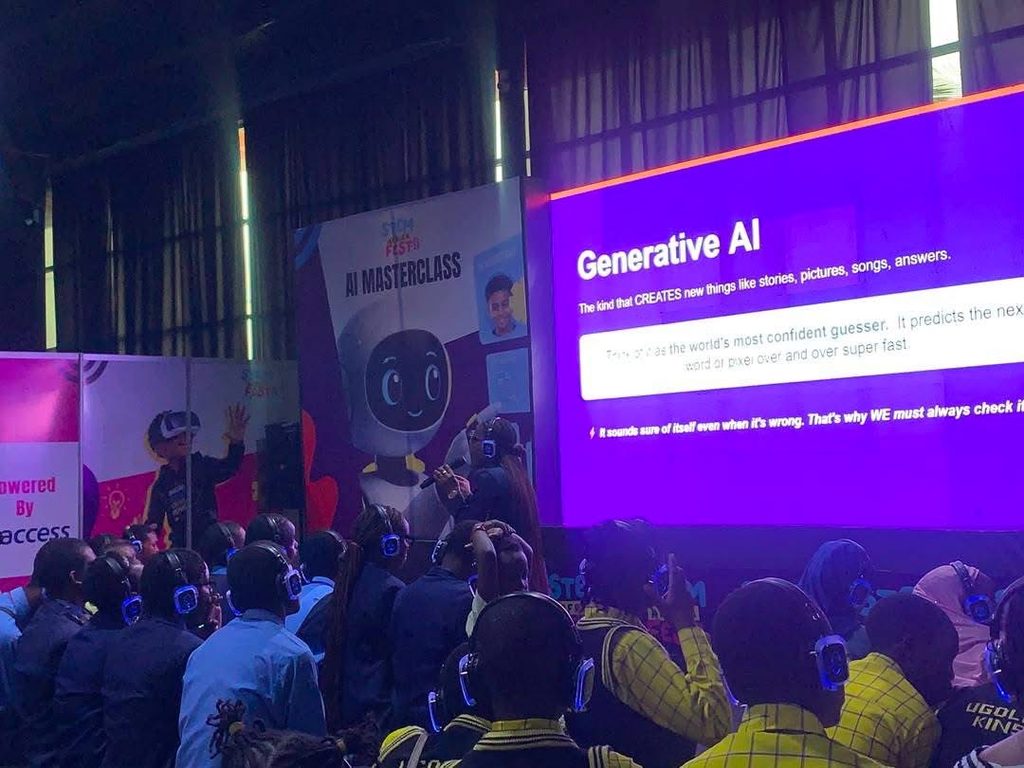
Preparing Nigerian Students for a Digital World
Artificial Intelligence (AI) is changing the way we live, work, communicate and learn. From intelligent search engines and virtual assistants to personalised learning platforms and AI-powered creative tools, technology is rapidly becoming part of everyday life.
For parents in Nigeria, this raises an important question: How can schools prepare children for a future that will be shaped by Artificial Intelligence?
At Covenant Child Academy (CCA), we believe the answer is not simply to teach children how to use technology. It is to help them become critical thinkers, creative problem-solvers, responsible digital citizens and confident future leaders who can use technology wisely.
This vision aligns with CCA’s mission of grooming the total child and empowering learners for successful leadership with moral uprightness. The school’s approach already combines academic excellence, character development, creativity, leadership and practical learning.
What Is Artificial Intelligence in Education?
Artificial Intelligence in education refers to the use of intelligent computer systems to support teaching, learning, research, creativity and problem-solving.
AI tools can help students:
- Find and organise information
- Understand difficult concepts
- Practise mathematics and languages
- Generate ideas for projects
- Develop digital content
- Learn at their own pace
- Explore subjects beyond the traditional classroom
- Develop technology and problem-solving skills
However, AI should support education rather than replace teachers.
A good teacher understands a child’s personality, strengths, challenges and emotional needs in ways that technology cannot. The future of education will therefore require a partnership between excellent teachers, innovative technology and responsible learners.
Why AI Education Matters for Nigerian Students
Nigeria has one of Africa’s largest and youngest populations, making education and digital skills increasingly important to the country’s future.
The careers available to today’s children may look very different from the careers available today. Artificial intelligence, robotics, software development, data science, digital entrepreneurship, cybersecurity, automation and other emerging fields are already transforming industries.
This means Nigerian students need more than examination knowledge.
They need digital literacy, creativity, communication, critical thinking, adaptability, collaboration and problem-solving skills.
At Covenant Child Academy, this philosophy complements the school’s existing emphasis on developing learners who are not only academically successful but also confident, articulate, talented and prepared for leadership.
AI Does Not Replace Learning — It Can Make Learning Better
One of the biggest misconceptions about Artificial Intelligence is that students will simply use AI to do their schoolwork for them.
That is not the kind of AI education we should encourage.
Instead, students should learn how to question, investigate, verify, create and think independently.
For example, rather than asking AI to write an entire essay, a student could use an AI tool to:
- Brainstorm possible topics.
- Research different perspectives.
- Identify areas requiring further investigation.
- Develop an outline.
- Compare information from different sources.
- Write the student’s own response.
- Review the work for clarity and accuracy.
The goal is to make the student a better thinker, not a passive user of technology.
The Role of Teachers in the Age of AI
The emergence of AI makes good teachers even more important.
Teachers will increasingly become facilitators, mentors, coaches and learning guides. They will help students distinguish between reliable and unreliable information, ask better questions, think critically and use technology ethically.
This is particularly important because AI systems can sometimes produce inaccurate, incomplete or misleading information.
At CCA, professional development and innovative teaching are already part of the school’s educational culture. The school has also featured training around AI skills in teaching, demonstrating the importance of equipping educators for the changing digital education environment.
From STEM Education to AI and Digital Creativity
Artificial Intelligence is closely connected to STEM education — Science, Technology, Engineering and Mathematics.
Students who participate in STEM activities develop the curiosity and problem-solving mindset required to understand emerging technologies.
CCA’s participation in the Lagos STEM Festival 2026 provided learners with exposure to robotics, coding, engineering, artificial intelligence, digital creativity and other emerging technologies. The experience reinforced the importance of hands-on learning, innovation, collaboration and creative problem-solving.
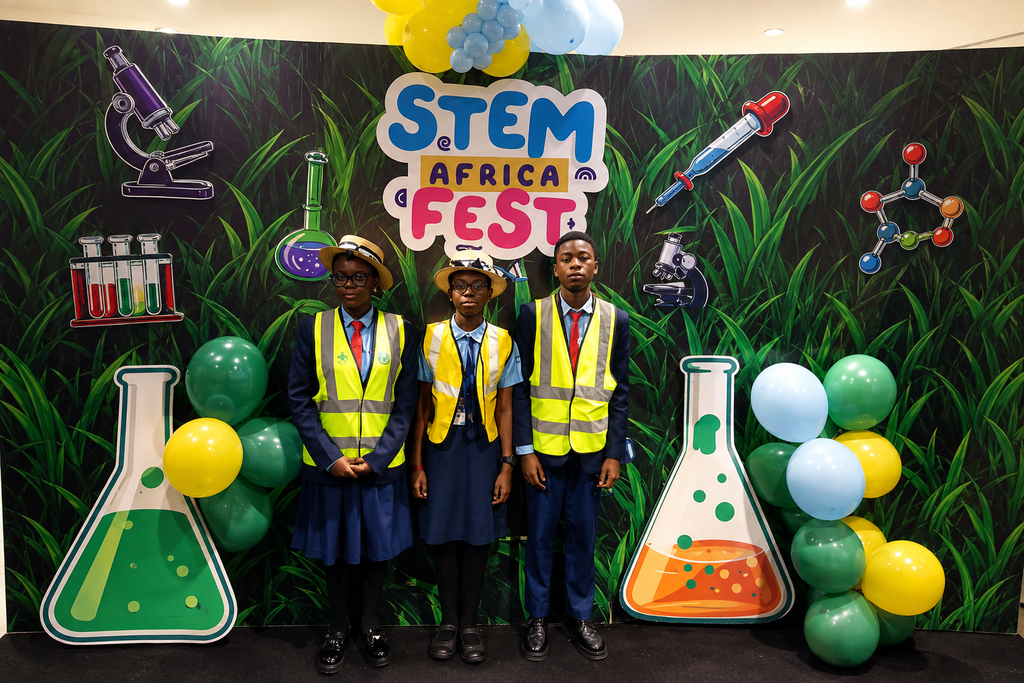
This type of experiential learning is critical because children should not only read about technology; they should have opportunities to explore, experiment, create and solve problems with it.
Preparing Children for the AI-Powered Future
CCA’s recent Digital Citizen 2026 programme demonstrates how this vision can translate into practical learning.
The programme exposes students to technologies and digital skills including:
- ChatGPT and AI productivity
- Canva AI and AI image generation
- Google Gemini
- Video editing
- AI voice and music creation
- YouTube Studio
- Animation creation
The programme is designed to give young people practical, future-ready skills while encouraging them to become creators rather than merely consumers of digital technology.
This is an important distinction.
The future will not belong only to children who know how to use AI. It will belong to children who know how to use AI to create value, solve problems and make a positive difference.
AI and Montessori Learning: Encouraging Curiosity and Discovery
For younger learners, technology should always be age-appropriate and balanced with real-world experiences.
CCA’s Montessori Pre-School places emphasis on exploration, investigation, experimentation and discovery — principles that naturally encourage children to ask questions and develop independence in learning.
AI should complement this philosophy rather than replace hands-on learning.
A child still needs to:
- Build with physical materials.
- Read books.
- Draw and create.
- Play and interact with others.
- Conduct experiments.
- Develop communication skills.
- Learn responsibility.
- Develop empathy and emotional intelligence.
Technology should enhance these experiences, not eliminate them.
Digital Citizenship: Teaching Children to Use AI Responsibly
As children gain access to increasingly powerful technology, digital citizenship education becomes essential.
Students need to understand:
1. Academic honesty
AI should not become a tool for cheating or submitting work that a student did not produce.
2. Privacy
Children should understand why personal information, passwords, photographs and sensitive data should not be shared carelessly online.
3. Online safety
Students need to recognise scams, misinformation, manipulation and inappropriate online content.
4. Critical thinking
Not everything generated by AI is automatically correct.
5. Responsible creativity
Students should understand copyright, ownership, attribution and responsible use of digital content.
6. Human values
Technology should always be guided by integrity, compassion, responsibility and respect.
These principles are particularly important at a school like Covenant Child Academy, where academic development is intentionally combined with Christian values, discipline, character formation and leadership development.
What Will the Future Classroom Look Like?
The classroom of the future may not look completely different from today’s classroom.
There will still be teachers.
There will still be books.
There will still be discussions, examinations, experiments, music, sports and friendships.
But technology will increasingly become part of the learning environment.
Students may use AI-powered learning platforms to practise difficult concepts. Teachers may use technology to identify areas where students need additional support. Learners may collaborate on digital projects with students in other countries. Virtual simulations may make complex scientific concepts easier to understand.
The classroom will become increasingly connected, personalised, interactive and creative.
Why Parents Should Look Beyond Examination Results
WAEC, JAMB and other examinations remain important milestones in a Nigerian student’s educational journey. Strong academic results can open doors to universities and future opportunities.
But examination success alone is not enough.
The future requires young people who can think, communicate, adapt, innovate and lead.
This is why holistic education matters.
Covenant Child Academy’s educational philosophy goes beyond preparing students for good grades. The school emphasises personal development, social skills, leadership, survival skills and emotional intelligence alongside academic achievement.
AI makes this holistic approach even more important.
The Future Belongs to Adaptable Learners
Artificial Intelligence will continue to evolve.
The specific tools students use today may be replaced by new technologies tomorrow. Therefore, the most valuable skill schools can teach is not mastery of one particular AI platform.
It is the ability to learn, unlearn and relearn.
A child who develops curiosity, resilience, creativity, critical thinking and a love for learning will be better equipped to adapt to whatever technology comes next.
That is the kind of future-ready education we should pursue in Nigeria.
Covenant Child Academy: Preparing Learners for Tomorrow
At Covenant Child Academy, education is about preparing children not only for the next examination but for the world beyond school.
From Montessori education and academic learning to STEM activities, technology programmes, music, leadership development and practical experiences, CCA continues to create opportunities for learners to discover their abilities and develop the confidence to use them.
The school’s participation in STEM initiatives and its Digital Citizen programme demonstrate a growing commitment to technology education, digital literacy and future-ready learning.
As Artificial Intelligence transforms education and the workplace, one thing remains constant: children need caring teachers, strong values, meaningful experiences and an environment that inspires them to learn.
Technology may change the tools we use.
But education will continue to shape the people who use them.
Preparing Today’s Children to Lead Tomorrow
The future of learning is not about choosing between teachers and technology.
It is about bringing together the best of both.
Human wisdom + Artificial Intelligence + strong values + creativity + critical thinking = future-ready education.
At Covenant Child Academy, we believe every child deserves the opportunity to develop the knowledge, skills and character needed to thrive in an increasingly digital world.
Covenant Child Academy — Raising Godly Heritage. Building Future Digital Leaders.